

News
NEWS
Industry insights
2026
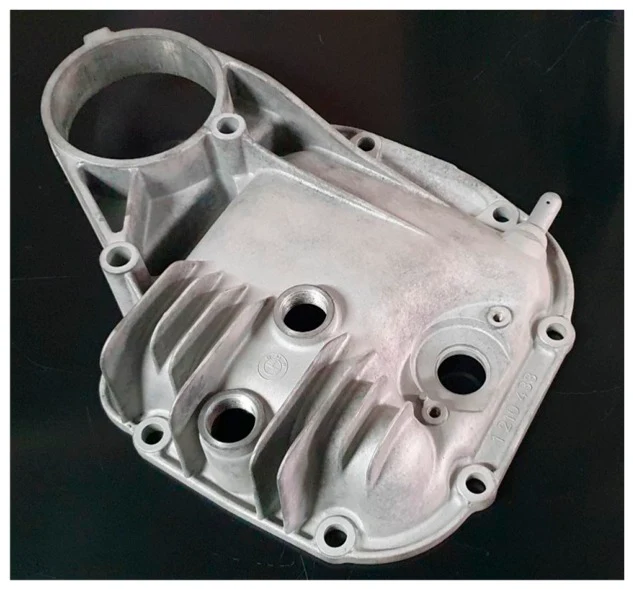
From Physical Scanning to Casting Simulation: Identifying Filling and Shrinkage Risks in a Housing
The 3D model of aluminum alloy differential cover was reconstructed, and ProCAST was used to analyze filling, solidification and defect prediction.
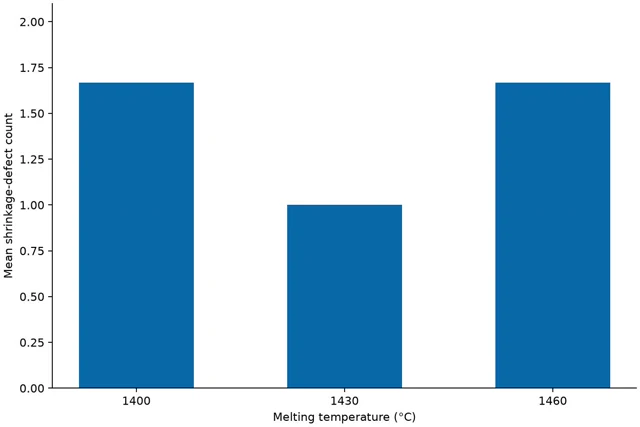
Identifying Improvements for Investment-Casting Shrinkage Cavities through Production Statistics and Orthogonal Experiments
The G4-28 0 cases combined defect classification statistics with Taguchi testing against melt temperature, hold time, and number of shell layers, and reported the statistical limitations of small sample verification.
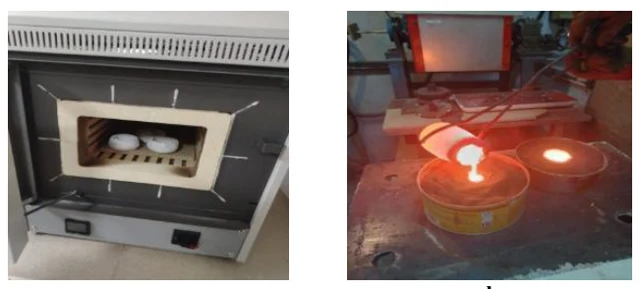
Balancing Permeability, Strength and Casting Surface Quality in Fused-Silica Shells
A five-layer shell mold prepared from fused silica and silica sol was studied. Its properties for investment casting of multicomponent high alloy were evaluated by permeability, compression resistance, thermal expansion and practical casting.
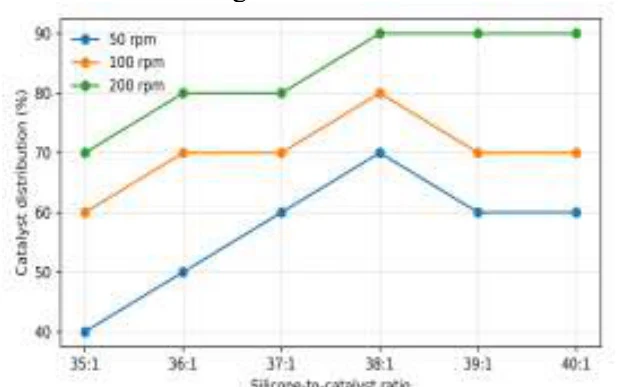
Reducing Bubbles in Silicone-Rubber Molds for Investment-Casting Wax Patterns
The bubble, surface state and curing time of silicone rubber mold vulcanized at room temperature were evaluated by comparing 18 sets of stirring speed and ratio.
Balancing Shell Strength and Permeability in Thin-Walled Steel Investment Casting
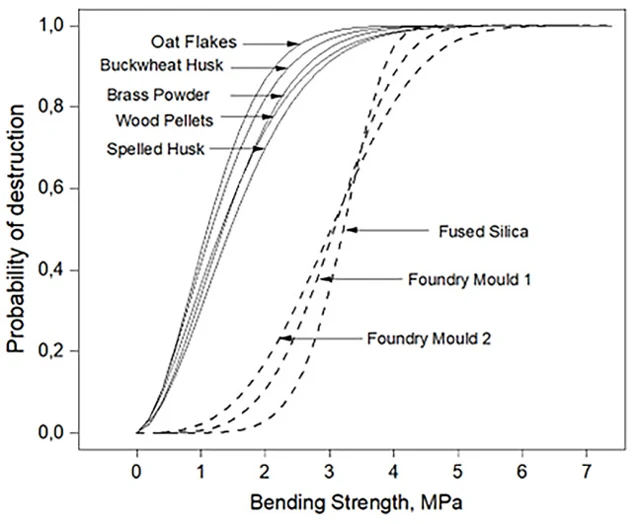
The bending strength of fused silica shell was reduced by 60% by setting a layer of modified sand. The effects of organic materials and brass powder on high temperature permeability were compared.
Comparing Casting Simulation with Trial Castings of Perforated High-Manganese-Steel Liners
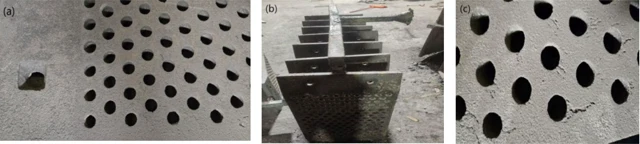
Holes in the porous liner alter the cooling process. The research team incorporated the effect of voids on heat conduction into the simulation, and then used the actual test casting to check the formation, hole location and working surface defects, and compared the model predictions with the casting performance.
Selecting Pouring Parameters for a Titanium-Alloy Pump Body through Simulation
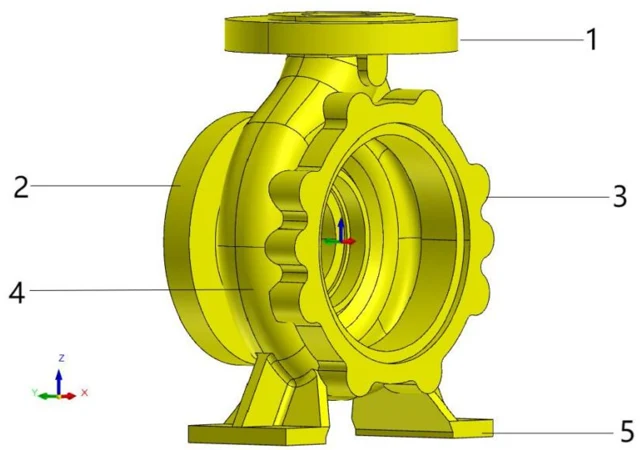
The study compares how pouring temperature, pouring time and shell-preheating temperature affect casting defects in a ZTA2 titanium-alloy pump body, using ProCAST to compare the initial process with the optimized scheme.
PLA and PolyCast Printed Patterns for Investment Casting: Shell Building and Firing Compared
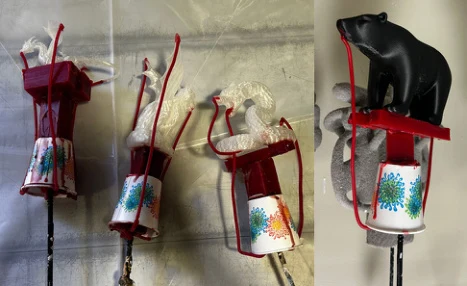
Eight patterns were made from 4 shapes and 2 types of printing wire. The technological adaptability of printing patterns was compared through tree assembly, coating, baking cleaning and gray iron casting.
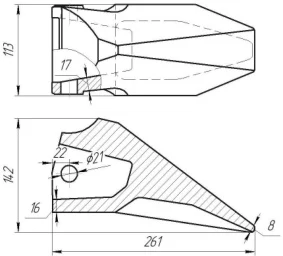
Reducing Shrinkage Cavities and Foam-Decomposition Surface Defects in Steel Bucket Teeth
A study on lost foam casting of bucket teeth was carried out. The filling speed, feeding channel, foam density and pouring temperature were compared by simulation and trial casting of two sets of pouring and feeding schemes.
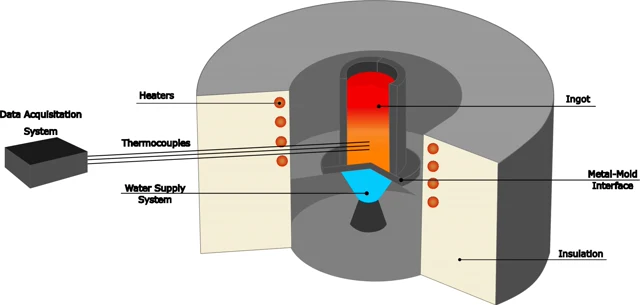
Choosing an Interfacial Heat-Transfer Model for Solidification Simulation: A Bayesian Comparison of Three Aluminum–Silicon Alloys
In a study based on cooling data of three hypoeutectic Al-Si alloys, nine interfacial heat transfer models were compared in the same statistical framework. The 3% and 9% Si alloys support the time-exponential model, while the 7% Si alloy retains three approximately constant candidates. Model selection depends not only on curve fitting, but also on prior, measurement error, and parameter sensitivity.
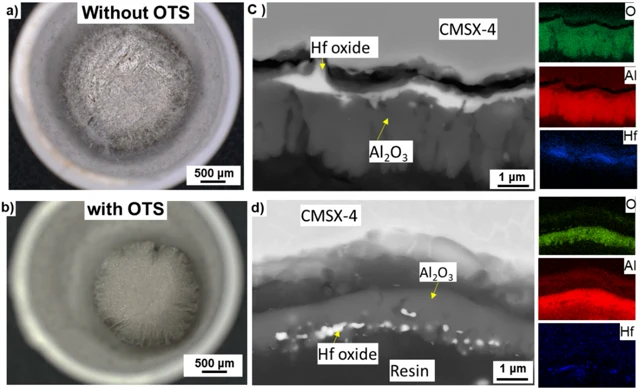
How Investment-Casting Shells Affect Alloy Nucleation: Oxygen Partial Pressure, Contact Time and Interfacial Reactions
Differential scanning calorimetry, interface microanalysis and thermodynamic calculations were used to compare the nucleation behavior of yttria and zircon coatings on CMSX-4 nickel-base superalloy. The results show that the stability of ceramics depends on the actual atmosphere and reaction process, and the influence of raw material name on solidification structure is not enough to judge.
2025
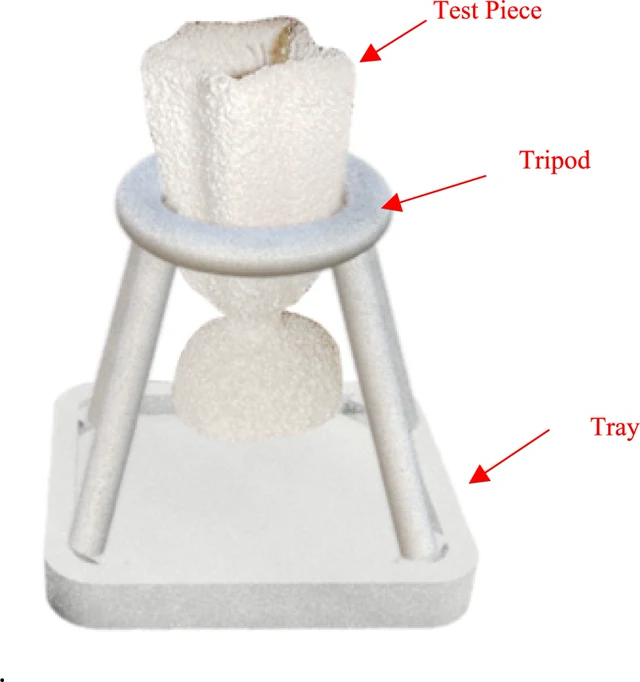
Activated-Carbon-Assisted Microwave Dewaxing of Ceramic Shells: Heating Uniformity, Wax Removal and Cracking
The microwave dewaxing of 30 samples with the same geometry was studied by adding activated carbon absorbing coating between wax pattern and ceramic shell. Results Surface temperature, wax recovery, and shell cracking were recorded simultaneously, showing an average dewaxing rate of 93.76%, while integrity was still evaluated in conjunction with residual moisture and localized heat buildup.
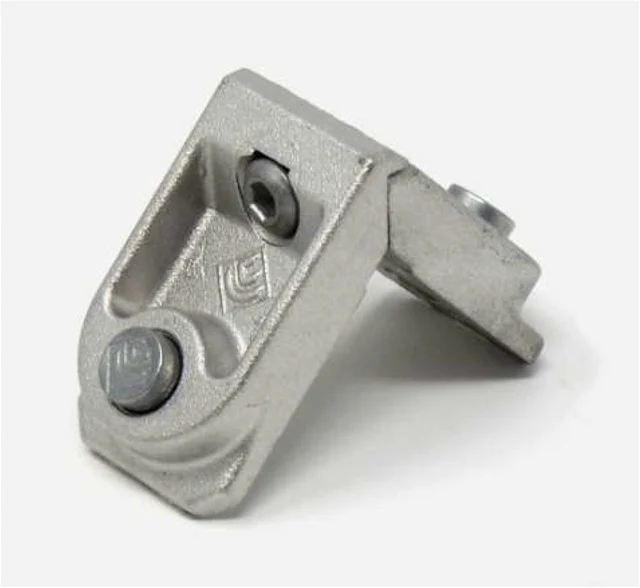
Reducing Flash and Gas Porosity in Die Castings: Simulation and Production Validation of Local Runner Modifications
In view of the flash, aluminum adhesion and local wear of aluminum alloy window frame bracket in the early stage of use of the mold, the flow-heat transfer simulation was used to reproduce the field working conditions, and two schemes of closing branch and increasing runner necking were compared. The modification effect was verified by infrared temperature measurement, casting appearance and internal pore inspection.
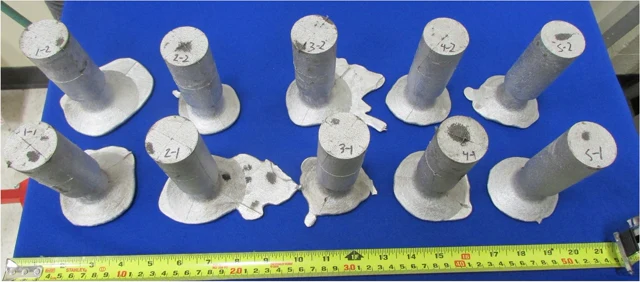
Joining 3D-Printed Sand-Mold Segments: Two Casting Trials on Dovetails, Assembly Clearance and Flash
The sand mold was divided into printable blocks and assembled layer by layer by dovetail joint. The assembly, shrinkage and flash were compared by two rounds of A356.2 aluminum alloy cylinder trial casting. the result showed that prop clearance and interlayer restraint determined that stability first, and the differences of dovetail height and joint angle on flash and shrinkage were not statistically significant within the teste range.
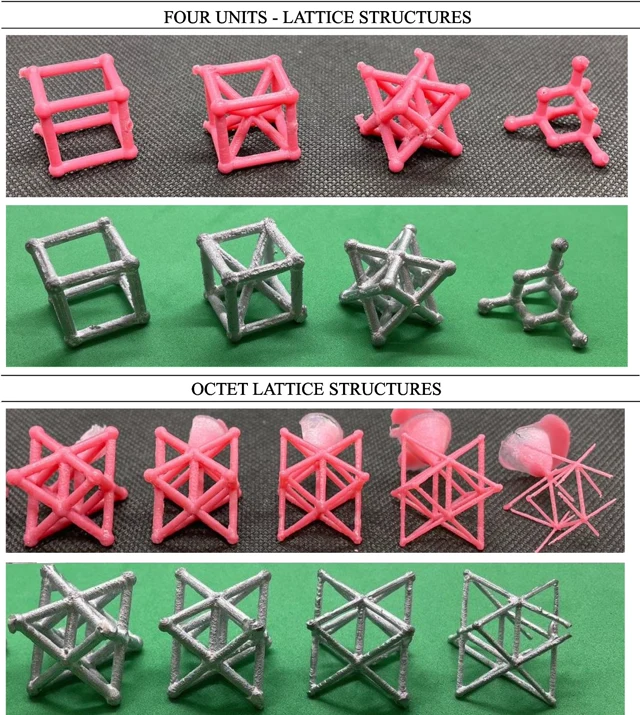
Replicating Wax Patterns with Water-Soluble Printed Molds: Dimensional Errors and Defects in Aluminum Lattice Investment Castings
In this paper, water-soluble PVA negative mold was printed by FDM, then wax was injected, the mold was dissolved and aluminum alloy investment casting was performed. The four types of lattice elements and the gradually refined octet structure show that the route can reproduce complex geometries, but printing, wax shrinkage and metal solidification contribute different errors, which need to be measured and compensated step by step.
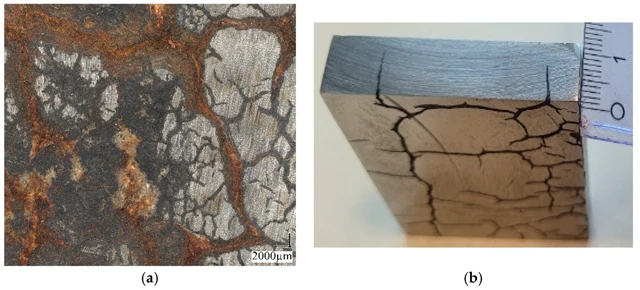
Thick-Walled Steel Castings: Microstructure and Impact Properties across a G17Mn5 Ladle Wall
The wall thickness of G17Mn5 cast steel slag pot was sampled along the decommissioning line. Combined with composition, inclusion, impact and micro-tensile tests, how the center segregation and inner wall cracks deteriorate the local toughness before the overall strength was analyzed.
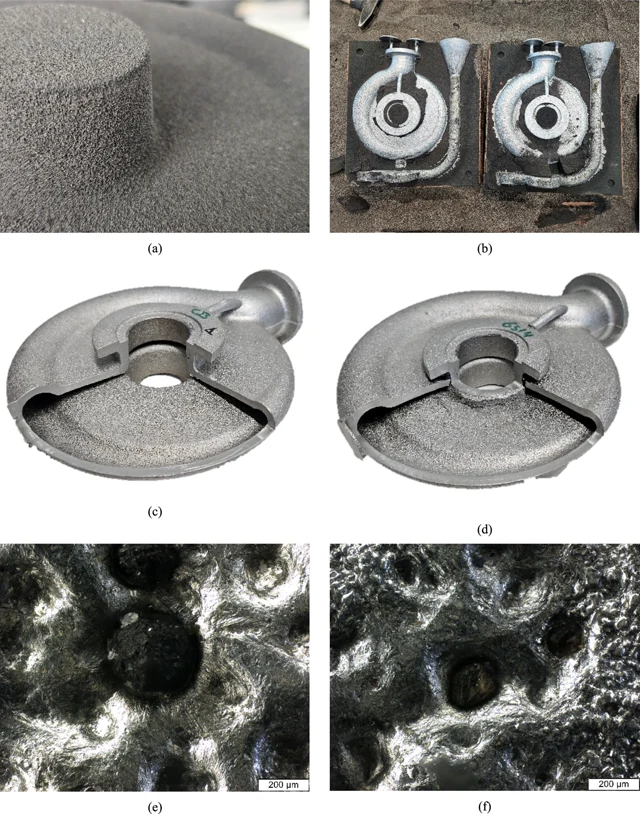
Sintered Bauxite Sand for 3D-Printed Cores: Recoating Speed, Strength and Pump-Housing Casting
Sintered bauxite sand and quartz sand were compared on the same VX500 equipment, sand spreading, furan resin and acid catalyst were investigated, and the forming and cleaning performance of aluminum alloy pump housing were verified by trial casting.
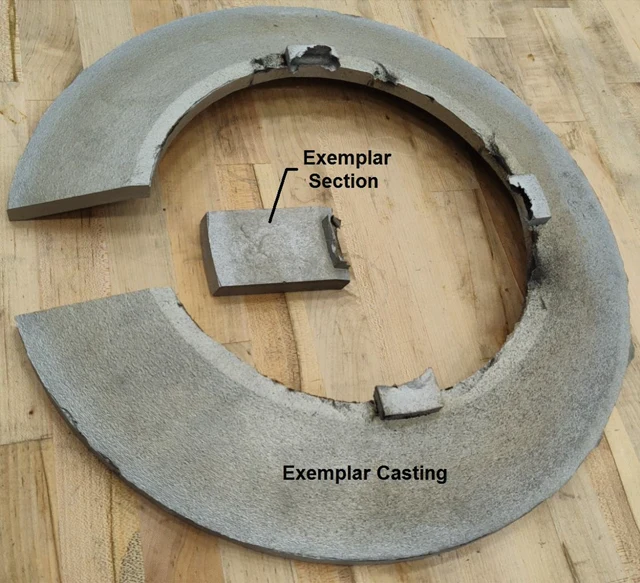
3D-Printed Sand Molds with Dynamic Gating: Drain Timing and A356 Casting Trials
A manually actuated valve is integrated into a 3D-printed sand mold to drain still-liquid gating metal once the castings no longer need feeding. Solidification simulation, four-point temperature measurements and tensile comparisons assess the approach.
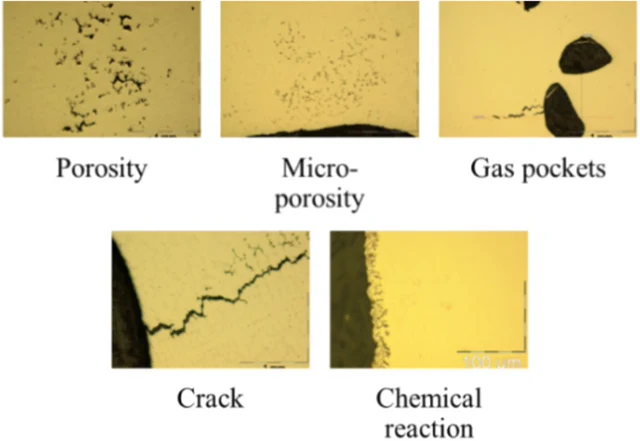
Assisting Microscopic Defect Assessment in Investment Castings: Random Forest and CNN Compared
Using production micrographs of casting sections, this study compares Random Forest and convolutional neural networks and examines resolution, dataset preparation and overfitting. The CNN achieved 98% test accuracy as an operator-assistance tool.
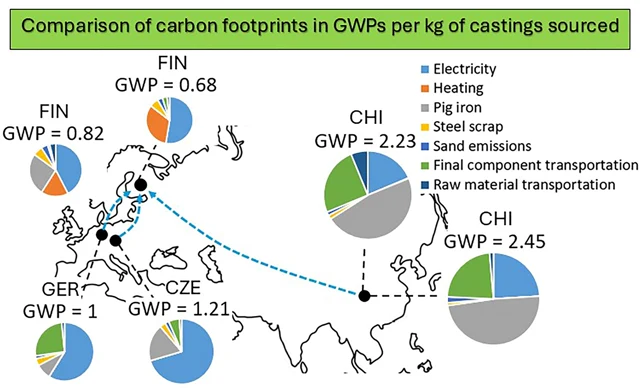
Comparing Carbon Footprints of Cast-Component Sourcing: Materials, Energy and Transport at Six Iron Foundries
Supplier questionnaires provide material and energy data from six iron foundries. Raw-material production, factory energy and transport are expressed per kilogram of casting to identify the respective roles of distance, furnace charge and energy supply.
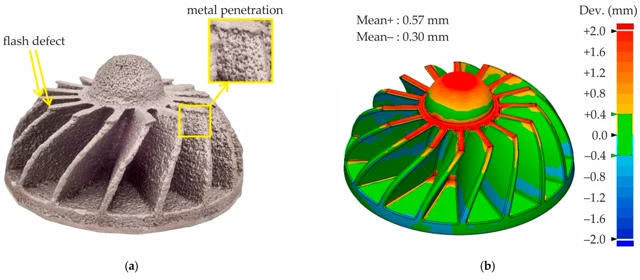
From Furan-Bonded Printed Sand to High-Temperature Casting Molds: Impregnation, Sintering and an Impeller Trial
Solid proppant and hollow cenosphere sands form different mold components. Silica-sol impregnation and sintering replace the organic bond, with microscopy, bending tests, shrinkage measurements and a nickel-alloy impeller trial evaluating the resulting mold.
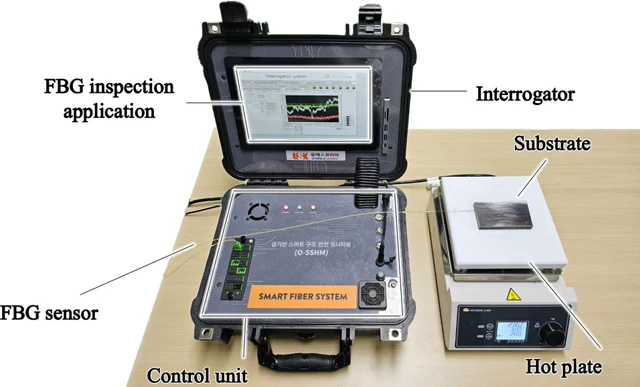
Embedding Optical-Fiber Sensors in H13 Die Material: Directed Energy Deposition, Depth Trials and Mechanical Tests
Directed energy deposition embeds AISI-304 tubing in H13 before fiber Bragg grating sensors are inserted. Multipoint temperatures at depths of 1.5–3.0 mm are compared alongside interface, hardness and tensile tests. Measurements extend only from room temperature to 200 °C.
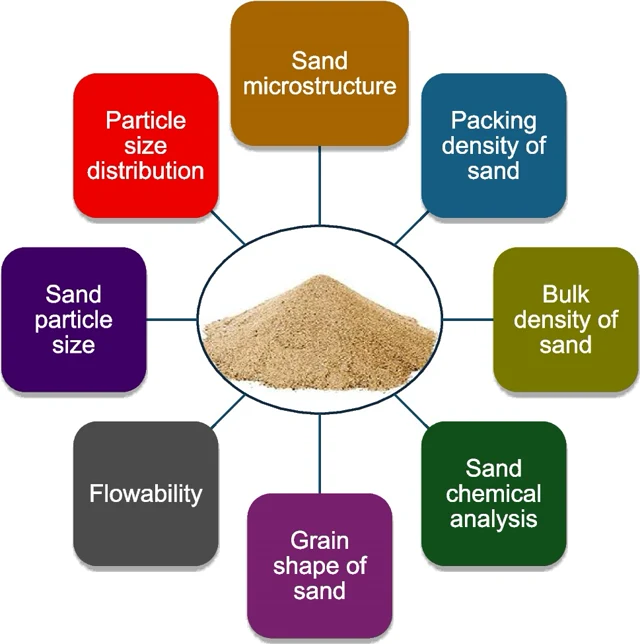
Why Grain Size Alone Cannot Define a 3D-Printed Sand Mold: Shape, Packing and Binder Interactions
This review connects grain-size distribution, shape, packing, flowability and chemical compatibility to printed-mold strength, gas evacuation, dimensions and casting surfaces, and examines what conventional sand tests need to add for layer-based manufacturing.
2024
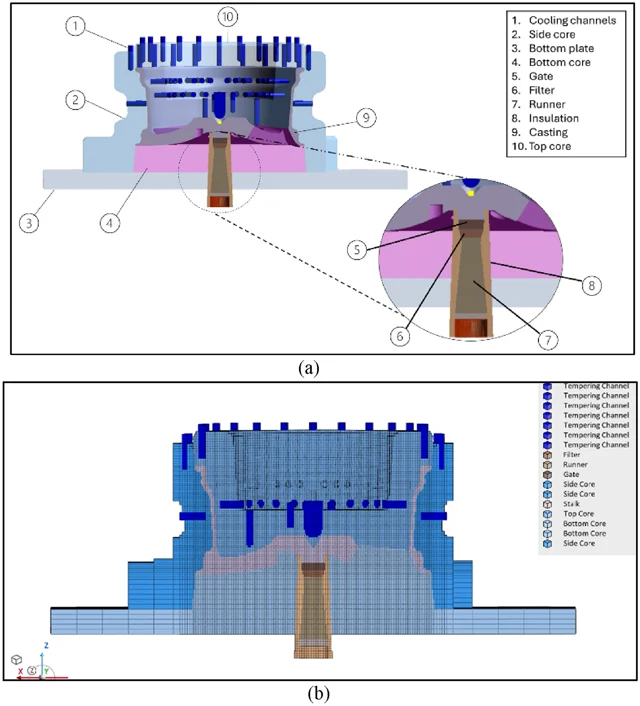
Low-Pressure Casting with Variable Secondary Aluminum: Porosity Simulation and Robust Process Selection
After optimizing wheel cooling/pouring, the study varies four elements across 90 simulations, comparing pore volume, S/N and quality loss. The best nominal design is not necessarily most robust to material variation.
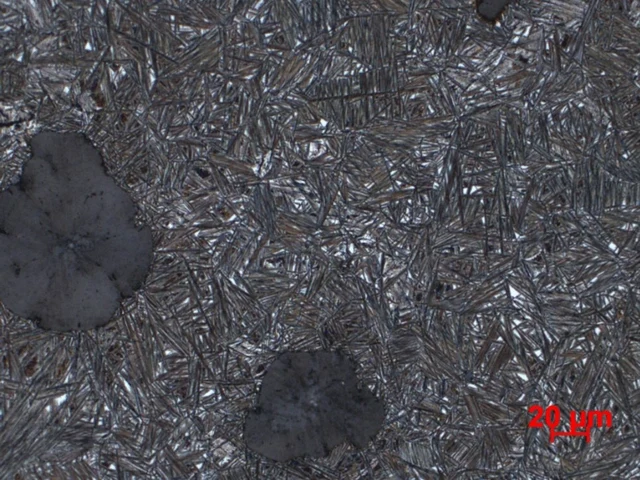
Predicting ADI Casting Properties: Machine Learning and Physical Test Comparisons
Using 513 ADI records, regression models are compared and checked through melting, heat treatment and mechanical testing. Strength/hardness agreement does not guarantee accurate elongation; completeness and microstructure remain crucial.
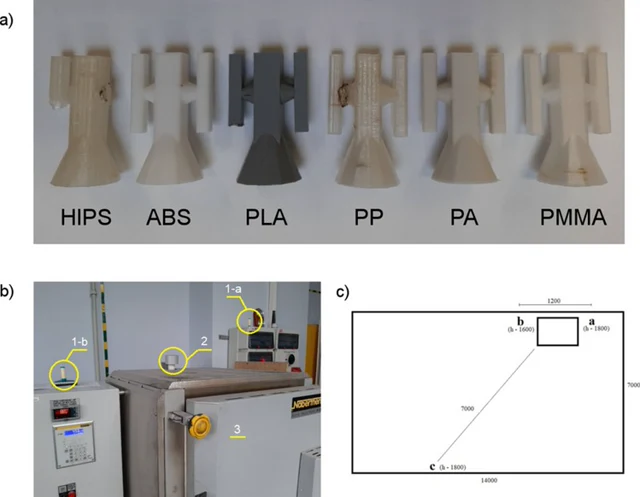
Gases from Printed-Pattern Burnout: VOCs and Thermal Decomposition of Six Polymers
Field passive sampling and TG–FTIR compare HIPS, ABS, PLA, PP, PA12 and wax-containing PMMA. Additives and background influence profiles; burnability or low residue alone cannot establish emissions.
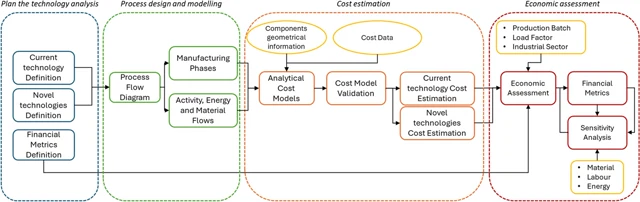
When to Print Investment-Casting Patterns: SLA, DLP and Material Jetting Compared
Five components compare wax injection with three printing routes, including washing and support removal. Cost/time crossovers and simplified payback are evaluated at 10%, 50% and 75% utilization.
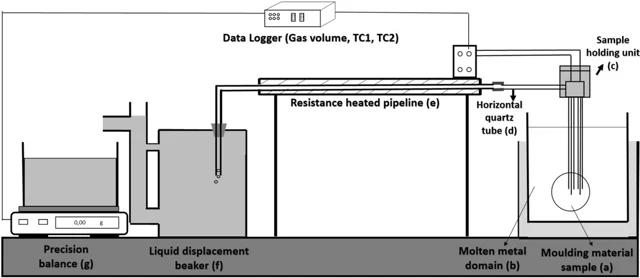
Gas Evolution from Foundry Sand: Immersion Tests and Simultaneous Thermal Analysis
A spherical furan-sand core is immersed in 1315 °C iron while temperature and evacuated gas are logged. More than 80% leaves within 65 s; decomposition, moisture and gas expansion overlap.
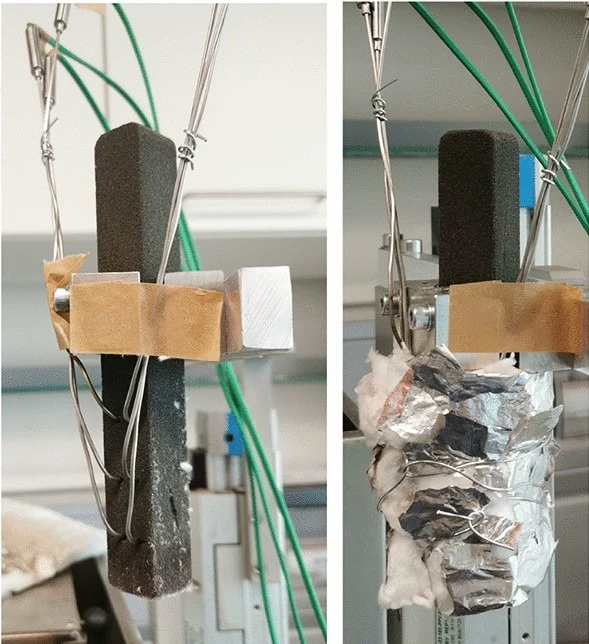
Heat Transfer in 3D-Printed Sand Molds: Six Aggregate–Binder Systems
Six silica, Cerabeads and chromite binder systems are tested by calorimetry and molten-aluminum immersion. Mass-specific heat, volumetric storage and contact degradation are evaluated separately.
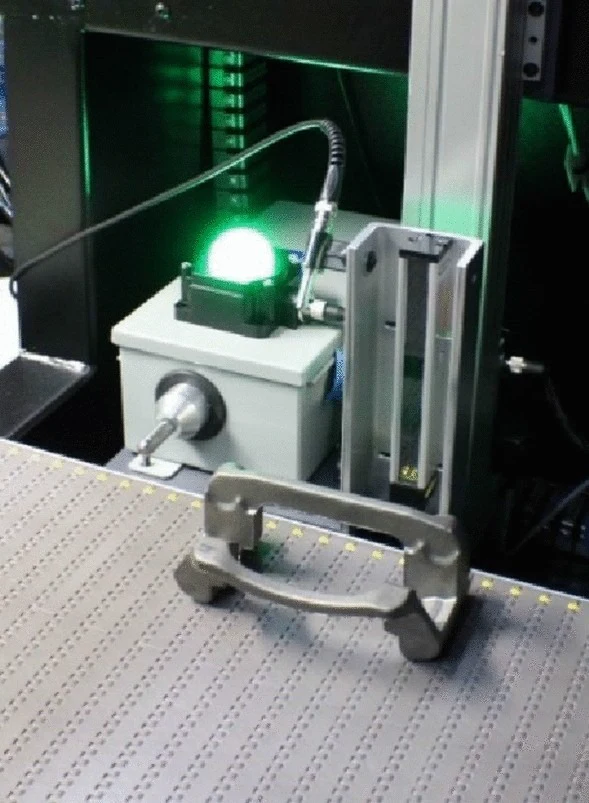
Beyond Scrap Rate: Acoustic Resonance, Mass Compensation and Casting-Lot Traceability
Mass and resonance data from 18 production date codes reveal variation hidden by broad acceptance windows. Investigation of an anomalous lot identifies mixed dates and repeated blast cleaning.
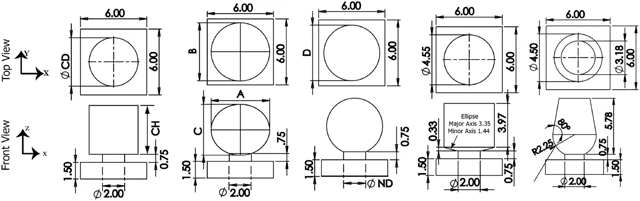
3D Sand-Printed Risers: Feeding Performance of Spherical Designs
Compare five types of risers for nickel aluminum bronze, carbon steel and aluminum alloy, and analyze the feeding capacity and process yield based on tube shrinkage, critical solid phase rate time and Niyama criterion.
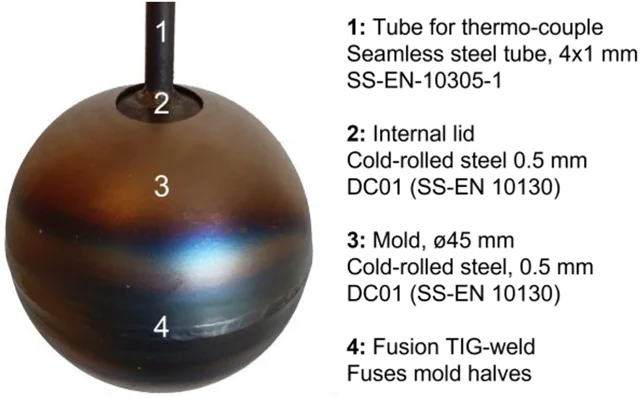
Linking Austenite Grains, Graphite and Dendrites in Gray Iron Castings
The spherical steel shell specimen was combined with direct isothermal quenching after solidification, two-dimensional FFT and EBSD to investigate the relationship between the columnar zone, equiaxed zone and fine graphite band.
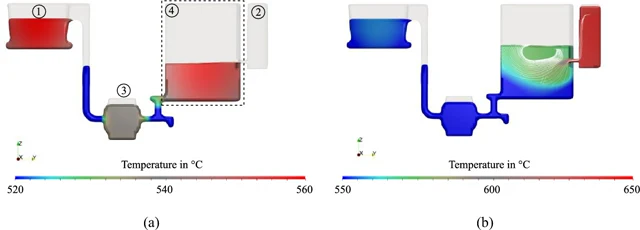
Dual-Alloy Sand Casting: Mixing Zones, Chilling and Oxide Inclusions
The sequential pouring test of AlSi9Cu3 and AlSi12 combines thermodynamic calculations, mold filling simulation and microscopic analysis to reveal the shape of the mixing zone and the formation conditions of oxidation defects.
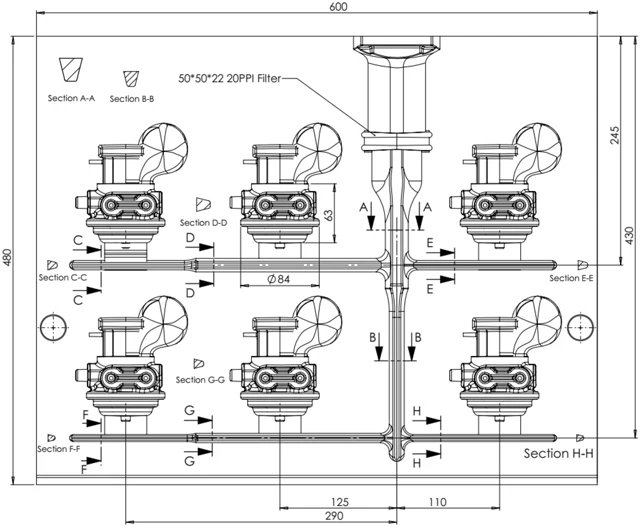
Gray Iron Filling Systems: Simulation, Production Trials and the Cost of Quality
Taking EN-GJL-250 bearing shell as the object, four gating systems are compared, and air entrainment, flow rate, production scrap rate and quality cost are linked.
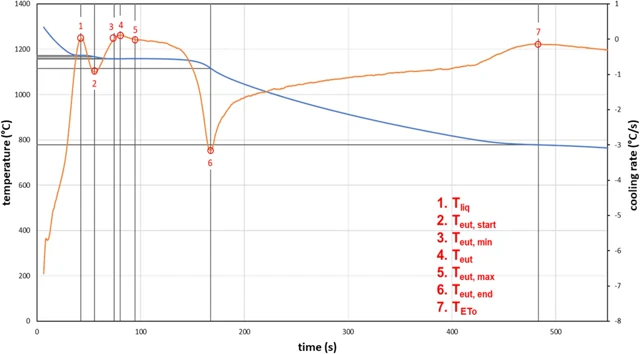
Predicting Ductile-Iron Tensile Strength from Cooling Curves
The study used ten years of thermal analysis records and 110 tensile specimens, combined with thermal modulus to establish a multiple regression model, and tested the prediction results with three geometric specimens.
2023
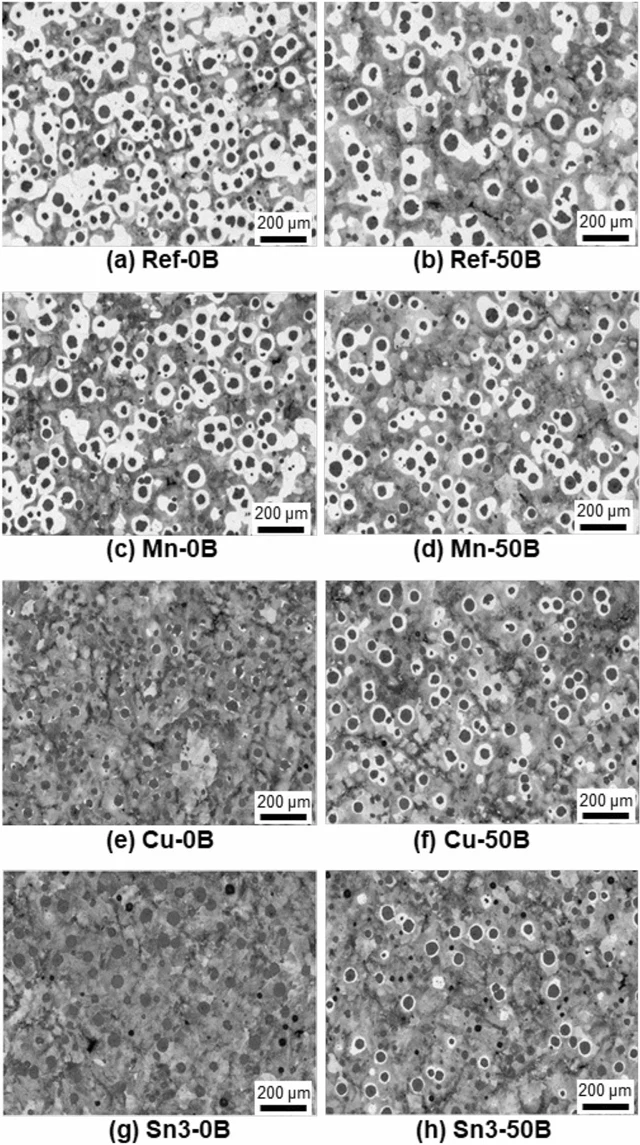
Microstructural Response to Alloying with Boron, Tin, Copper, and Manganese in Ductile Iron
Through two sets of melting, microstructure and thermal analysis, the effects of trace boron on ferrite, graphite morphology and eutectoid transformation under different pearlite promoting element combinations were compared.
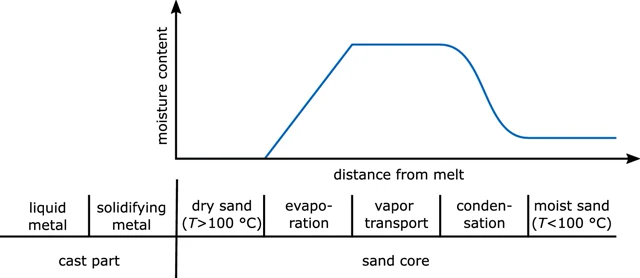
Inorganic sand core storage humidity: binder content and gas evolution surge
By comparing different storage relative humidities and binder contents, and in conjunction with permeability, moisture content, controlled heating, and molten aluminum immersion tests, the gas evolution rate and the onset of abrupt gas evolution were investigated.
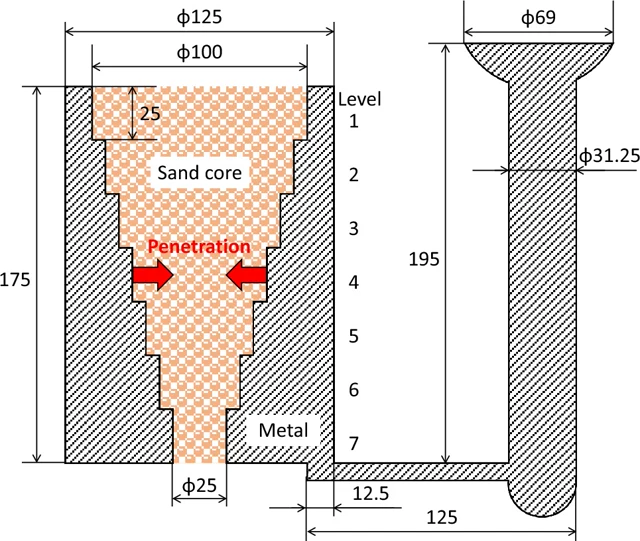
Molten Iron Penetration into Sand Molds: The Role of Capillary Pressure and Pore Structure
The penetration depth under varying sulfur content and static pressure was investigated using a stepped-cone test; an equivalent aperture slope was introduced, and a heat‑flow coupling simulation was employed to analyze the mechanism underlying the cessation of penetration.
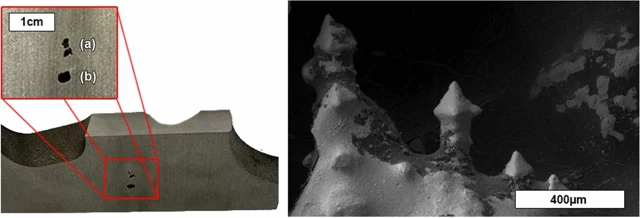
Vermicular Graphite and Nodular Cast Iron Porosity: Microscopic Evidence from Actual Castings
By analyzing the fracture surfaces, corrosion microstructures, and scanning electron microscope images of industrial castings, this study investigates the relationships among graphite within pores, graphite films, local spheroidalization rates, and surface flaky graphite layers.
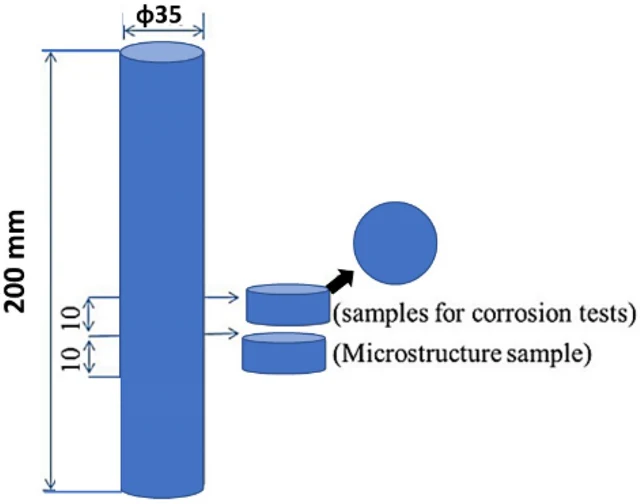
Silicon-Molybdenum Ductile Iron: Corrosion in Chloride and Acidic Environments
Using SiMo cast irons with varying molybdenum contents as the test subjects, polarization and impedance measurements were conducted in NaCl and H₂SO₄ solutions to compare graphite, carbides, and corrosion reactions.
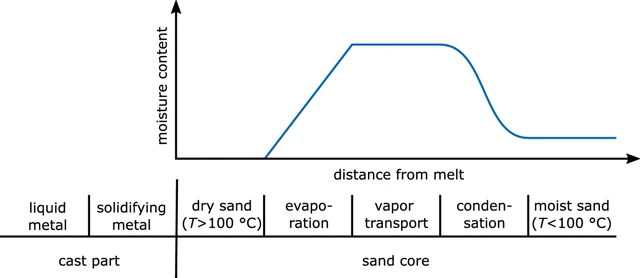
Gas Evolution and Permeability of Inorganic Sand Cores: Establishment of a Controlled Test Apparatus
Using argon protection induction analysis furnace, continuous weighing and differential pressure measurement, the test method of gassing and permeability of sand core was established and cross-verified with the results of moisture analyzer.
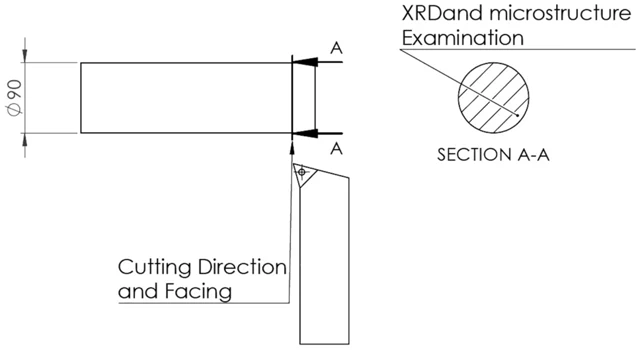
Austempered Ductile Iron: How Does Austenite Stability Affect Dry Turning?
The machinability of three isothermal quenching microstructures was evaluated based on cutting force, martensite transformation, tool wear, surface roughness, and chip morphology.
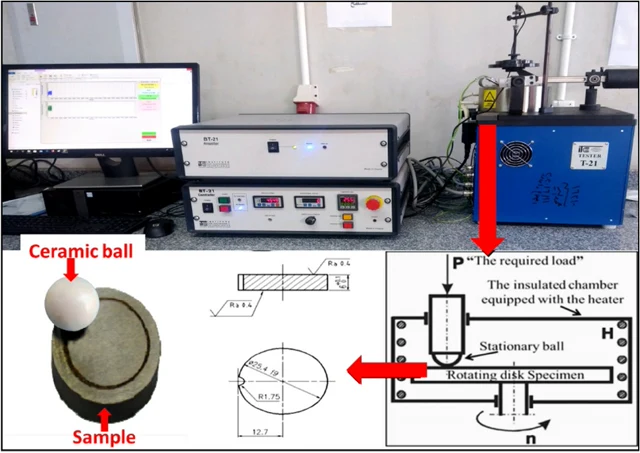
Silicomolybdenum Ductile Iron: Molybdenum Content and High Temperature Wear
The effects of molybdenum on the carbides, transformation temperature, and wear resistance of SiMo ductile iron were analyzed using thermodynamic calculations, dilatometry, microstructural characterization, and multi-temperature wear testing.
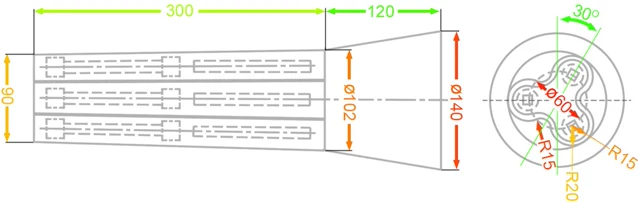
Duplex Stainless Cast Steel: Balance Between Solution-Treatment Holding Temperature and Strength–Toughness
Using GX2CrNiMoCuN 25-6-3-3 cast steel as the subject, this study investigates the holding temperature that achieves a balance between strength and ductility through heat treatment, phase composition analysis, and mechanical testing.
Niobium-containing high-alloy cast steel: Quantitative evaluation of hot cracking susceptibility
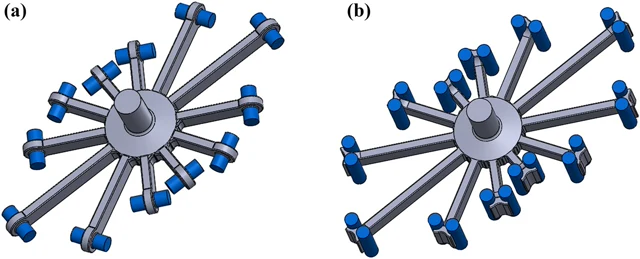
This study investigates niobium alloying in heat-resistant cast steel 1.4837, and, by combining modified restrained‑rod specimens, thermal analysis, and microstructural characterization, evaluates the hot‑cracking susceptibility and solidification range.
Thermal Conductivity and Tensile Strength of Cast Iron: Comparison of Various Graphite Morphologies
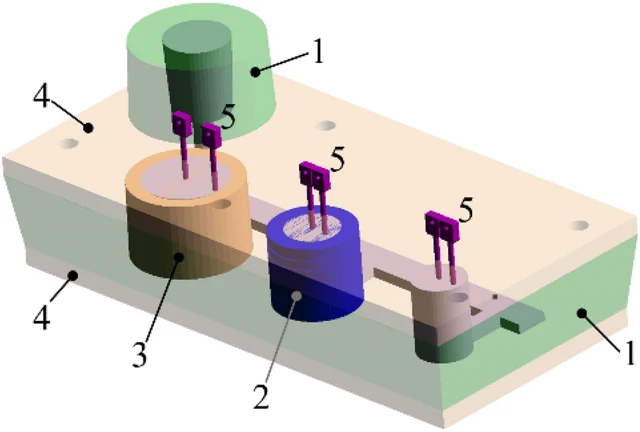
Cast irons with varying graphite morphologies and cooling conditions were produced via sand casting and remelting experiments. Empirical correlations were established by comparing these results with laser flash analysis of thermal diffusivity and tensile testing.
Cast Zinc-Aluminum-Magnesium Alloy: Magnesium Content and Corrosion Resistance
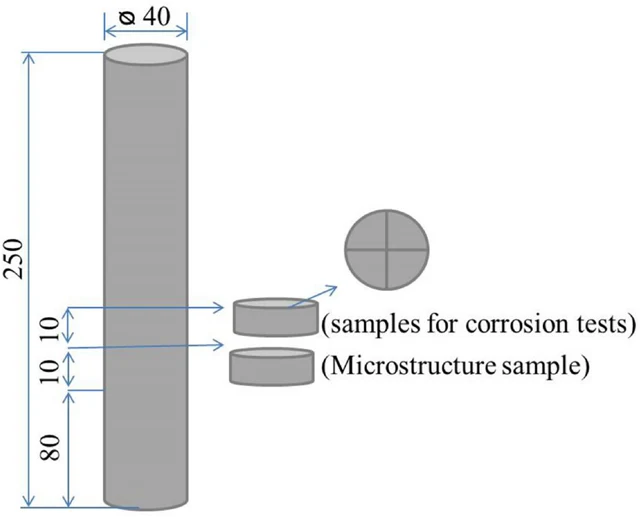
The relationship between microstructure refinement, corrosion products, and corrosion resistance was investigated in Zn-0.5Al alloys with varying magnesium contents, using microstructural analysis, polarization measurements, and impedance spectroscopy.
2022
Aluminum-Copper Composite Casting: Oxygen-Free Interface and Thermal Conductivity
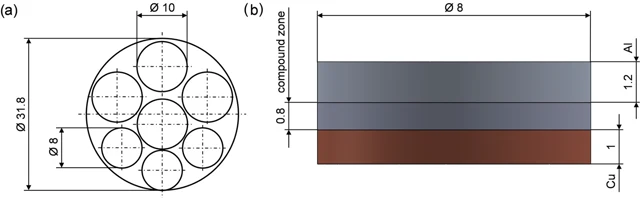
Aluminum–copper composite casting was performed in a silane‑containing inert atmosphere, and the effects of crucible and mold temperatures on the microstructure, thickness, and thermal conductivity of the bonding zone were investigated.
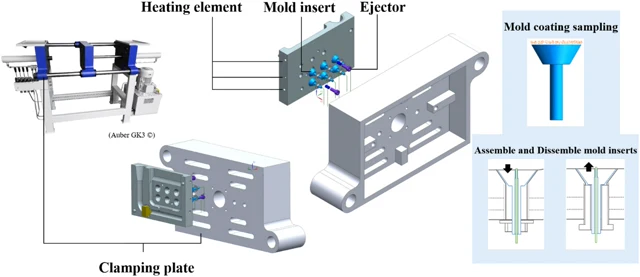
Aluminum-silicon alloy metal mold coating: assessing coating thickness from the casting surface
Pouring tests were conducted on nine coating thicknesses; the three-dimensional surface parameters, microstructure, and hardness of the coatings and castings were compared, and methods for indirectly evaluating coating condition were analyzed.
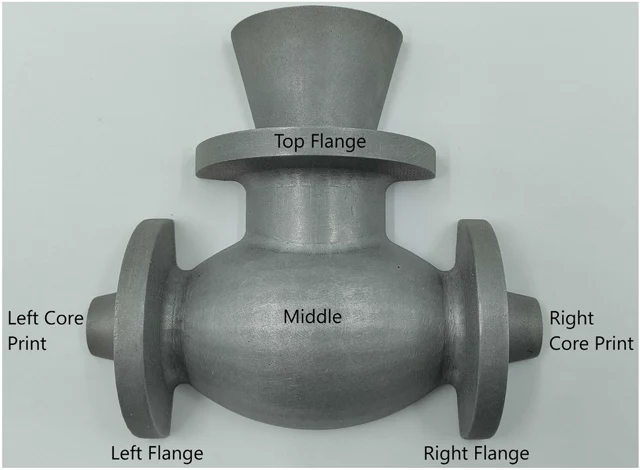
Inorganic Foundry Binders: Sand Mold Strength, Dimensions, and Casting Surface Quality
Different inorganic binders were compared with combinations of silica sand, sintered bauxite, and ceramic sand; ductile iron casting and three-dimensional scanning were used to evaluate mold and casting quality.

Xinghua Liangze Metal Products Co., Ltd. specializes in precision investment casting.
Contact us
- Service line
- 0523-83788318
- Telephone
- 1875249989713814494169
- 2082804352@qq.com
- Address
- Peima Industrial Zone, Dainan Town, Xinghua, Jiangsu, China
Copyright © 2026 Xinghua City Liangze Metal Products Co., Ltd
Website by Shenzhen Xingfu Zhichuang Technology Co., Ltd. 鲁公网安备37010402441776号